Glass & Locks
Sliding Door Mortise Locks: Common Problems
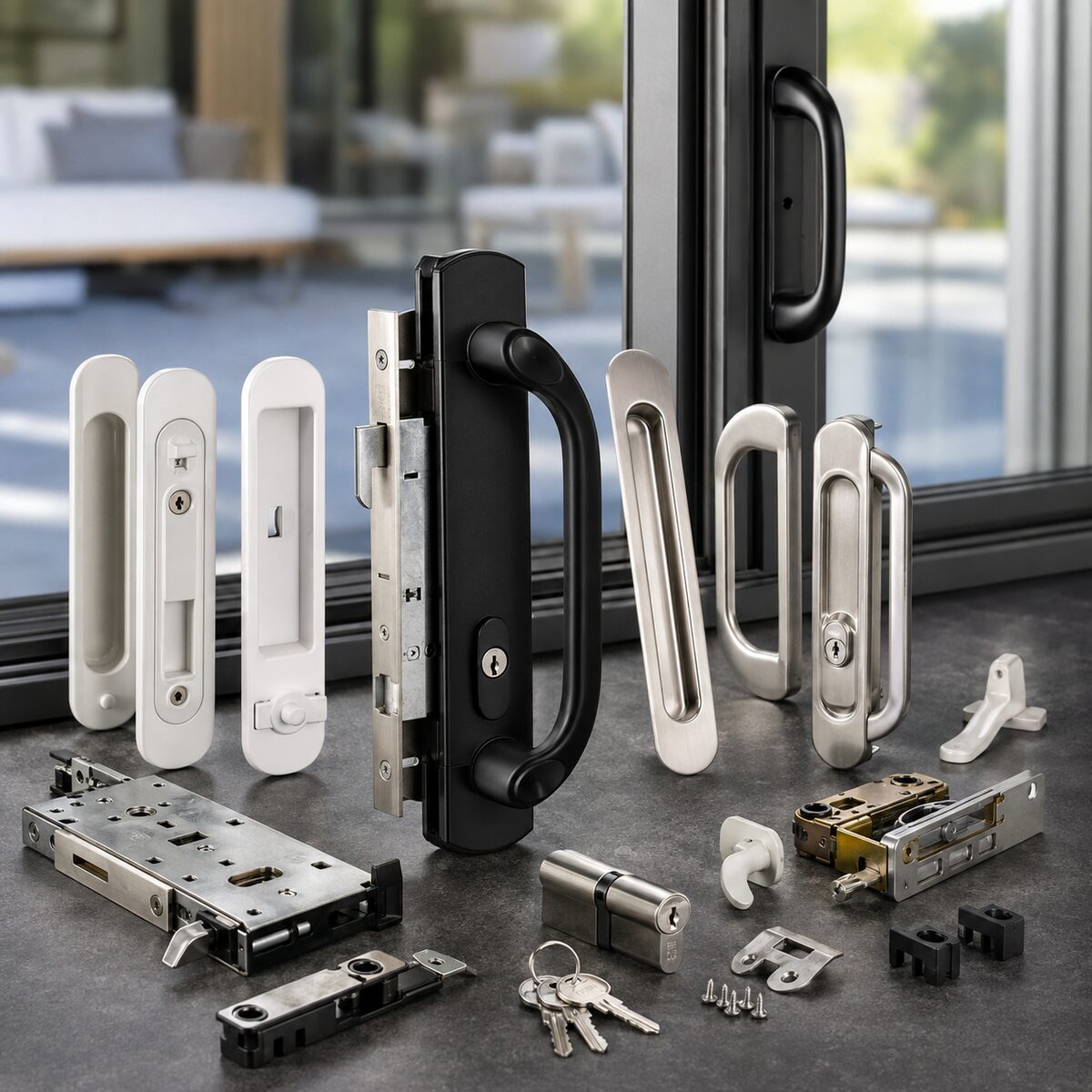
Many patio doors use a mortise lock hidden inside the vertical edge of the moving panel. The handle operates that internal mechanism, which engages a keeper on the frame.
Common failures include a broken hook, worn internal components, loose handle hardware and a keeper that no longer aligns with the lock.
Before lock and handle repair, we check whether the door itself is aligned. A perfectly good mortise lock cannot engage a keeper that is now too high or too low because the rollers have worn.
Older locks can create the same parts-identification challenge as old rollers. Dimensions, screw spacing, faceplate shape, hook direction and backset can matter more than the brand name printed on the handle.
If the original part is discontinued, a compatible replacement may still exist. The key is measuring the hardware before ordering.
Repair, adjust or replace?
Adjustment is appropriate when the hardware is healthy and the panel simply needs to be set to the correct height. Replacement is appropriate when a wear component has actually failed. Track work is appropriate when the running surface can no longer support smooth wheel travel. Complete door replacement belongs in a different category and should be considered when the overall system—not just one serviceable component—is no longer a practical repair.
That distinction matters because the symptoms overlap. A dropped panel can make a good lock look defective. A failed roller can make a good track feel rough. A damaged track can destroy a new roller. A frame problem can return even after repeated roller adjustment.
Delta's approach is to find the cause before choosing the size of the repair. A door should not be replaced simply because it is old, and an old component should not be preserved when it is clearly the part causing the damage.
Alignment before hardware
A mortise lock works only when its hook and keeper meet in the right place. If the panel has dropped because of roller wear, replacing the lock may not change that geometry. We therefore check how the door sits in the opening before deciding the internal lock is the failed component.
When the lock itself is damaged, identification involves its own measurements: faceplate dimensions, screw spacing, backset, hook direction and handle relationship. Older lock hardware can be just as model-specific as older rollers.
Questions homeowners often ask
Can this problem usually be diagnosed without replacing the whole door?
Often, yes. The useful first step is identifying the failed component and checking the condition of the surrounding system. The age of the door by itself does not determine whether it is repairable.
Can you give an exact repair price from a photo?
Not reliably. Delta provides a free on-site estimate because roller type, track condition, panel weight, hidden hardware and secondary damage can change the scope of the repair.
Can the repair sometimes be completed during the same visit?
When the customer approves the estimate and the correct parts are available, many common repairs can be completed during the same visit. Unusual or discontinued hardware may require additional sourcing.
Should I keep using the door if it is grinding or becoming very heavy?
It is better to avoid forcing it. Continued use can turn a worn component into additional track, handle, lock or frame damage.
Need the door inspected?
Delta Sliding Doors provides free on-site estimates. We inspect the door in person, explain what is causing the problem, and provide the price before work begins. If you approve the estimate and the required parts are available, many repairs can be completed during the same visit.
Why we inspect the complete door
Sliding-door components affect one another. Movement, alignment, locking and weather contact all depend on where the panel sits in the opening. That means a repair decision should account for the condition of the rollers, track, frame and related hardware even when only one component ultimately needs work.
This does not mean every service call should become a list of extra repairs. The opposite is the goal: checking the system helps us distinguish the failed part from components that are still serviceable.
What the homeowner should expect
The first step is an on-site inspection and estimate. We operate the door, identify the symptom, inspect accessible components and determine whether hidden hardware needs to be exposed for accurate identification. We explain what we found and provide the price before work begins.
When a common part is available and the repair is approved, many jobs can be completed during the same visit. When an older or unusual component needs to be sourced, we would rather identify it correctly than force a “close enough” part into the door.
Want it looked at in person?
Delta gives a free on-site estimate across Jacksonville & 75 miles around.