Rollers & Tracks
Should You Use WD-40 on a Sliding Glass Door Track?
We understand why people reach for WD-40. The door is hard to move, there is a can in the garage, and lubricant feels like the obvious answer.
The problem is that lubrication cannot repair a seized bearing, flattened wheel, bent track or failed adjustment mechanism. It can also attract dirt when a wet residue is left on a track that already collects dust, pet hair and sand.
Start with cleaning. Vacuum loose debris from the lower track and wipe the running surface. If the door remains heavy, noisy or uneven, the issue may be mechanical.
Do not spray chemicals into every opening of the frame hoping they will reach the bearing. Some roller assemblies are enclosed, and excess product can create a dirty paste without reaching the failed component.
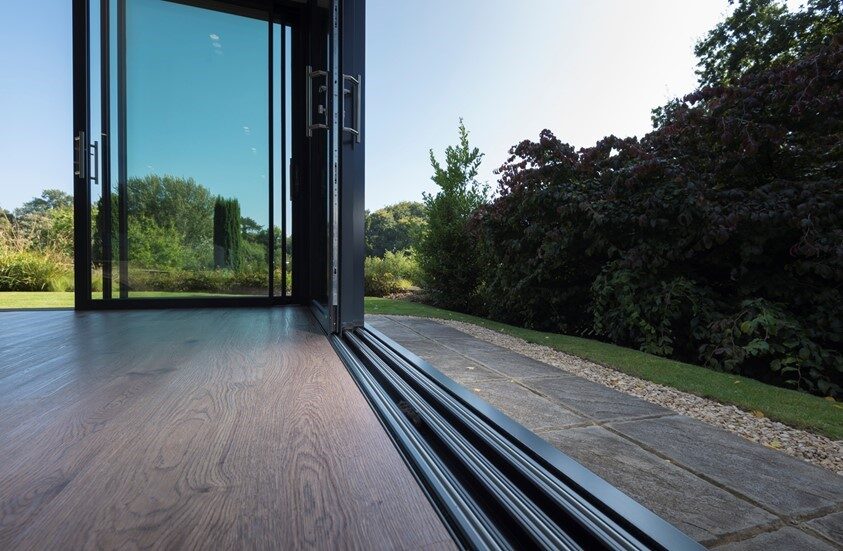
If the problem is worn hardware, roller replacement is the repair. If the running surface is damaged, look at track repair.
In sandy Northeast Florida environments, clean hardware matters. Lubricant has a place when the manufacturer or hardware design calls for it, but it should not be used to hide a problem that needs diagnosis.
What we look at before recommending a repair
A useful diagnosis starts with the complete moving system. We operate the panel through its full travel and pay attention to where resistance begins, whether the resistance changes as the door moves, whether the panel rocks, and whether lifting slightly on the handle changes the way it rolls. Those details help separate a wheel or bearing problem from a damaged running surface or an alignment issue.
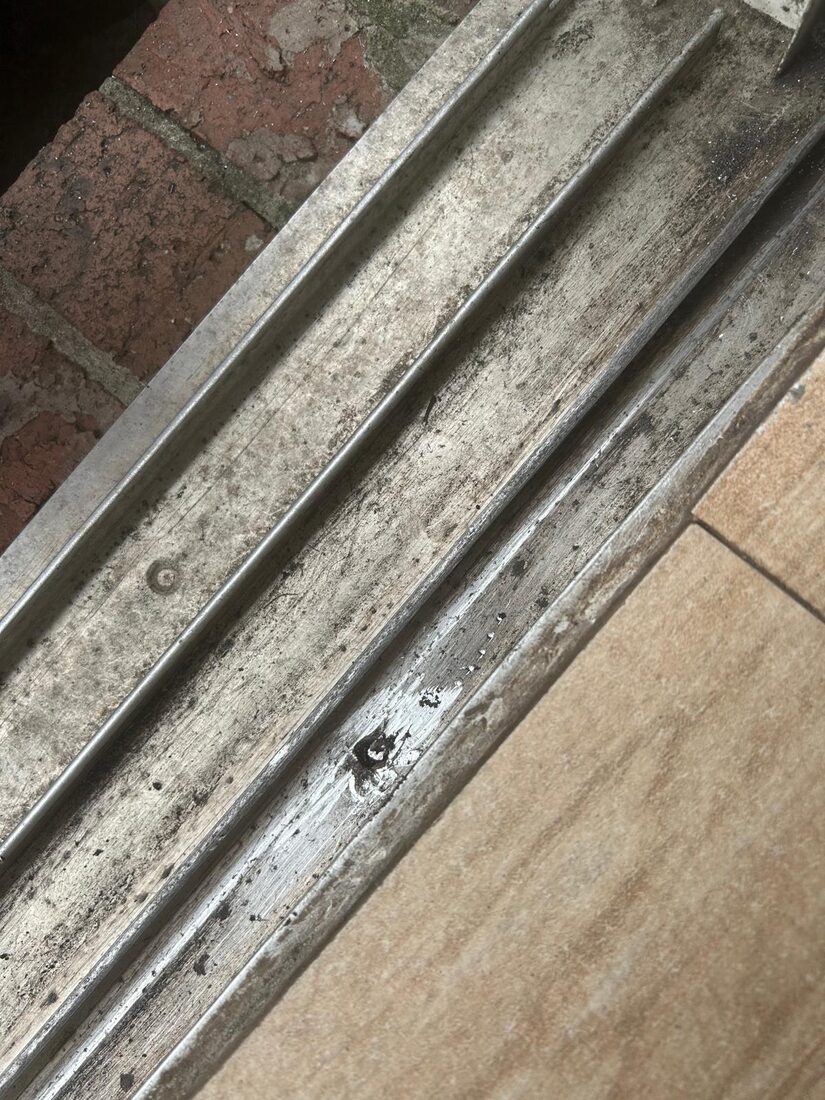
Next comes the lower track. We look for dents, flattened areas, pitting, corrosion, raised edges and evidence that metal has been dragging instead of rolling. We also look at the panel height and the gaps around the frame. If one side is sitting lower, that can affect the lock and weather contact even when the lock itself is still functional.
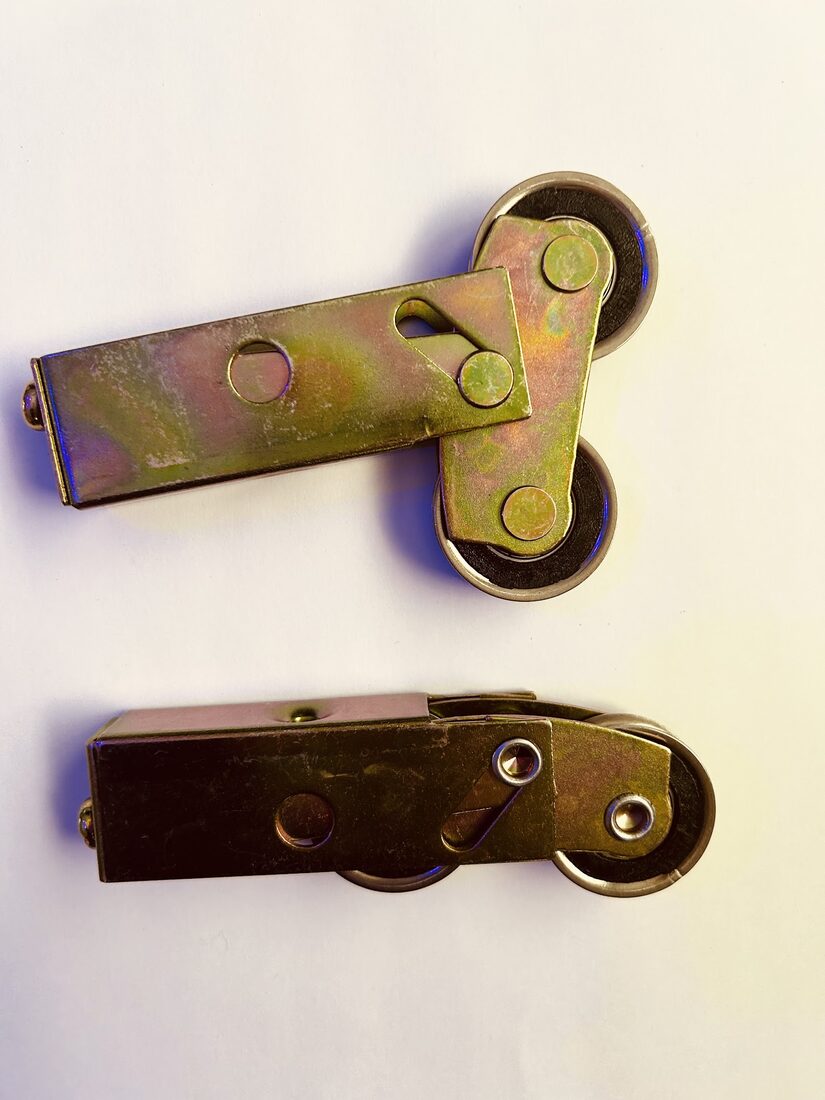
When the roller assembly has to come out, identification becomes much more precise. Housing length, width and height, wheel diameter, wheel width, axle location, mounting style, adjustment-screw position and single-versus-tandem configuration can all matter. On a heavy panel, load capability matters as much as physical fit.
That is why we avoid diagnosing an older door from one exterior photo. A photograph can show the symptom; the hardware inside the bottom rail usually tells the rest of the story.
What not to do while the door is getting worse
The safest homeowner maintenance is simple: keep the lower track clean and remove loose debris. What we do not recommend is repeatedly forcing a heavy panel, bending the track with hand tools, grinding the running surface without knowing its profile, or flooding the lower frame with lubricant.
Lubricant is especially misunderstood. It cannot rebuild a failed bearing or straighten a damaged track. Some roller manufacturers use sealed, grease-packed bearings and specifically instruct users to keep the track clean rather than lubricating the bearing or track surface. The correct maintenance depends on the hardware, so more spray is not automatically better.
A heavy glass panel is also not a good solo DIY removal project. Impact-rated panels in particular can be extremely heavy. If the repair requires removing the moving panel to access hidden hardware, safe handling is part of the job.
The glass is part of a system
Before replacing glass, we identify how the panel is constructed and glazed. Safety-glazing requirements, glass thickness, insulated-unit construction, frame condition and the way the panel is retained all affect the repair. Impact-rated assemblies deserve particular care because impact performance belongs to a tested system, not simply to a piece of glass that looks similar.
A glass problem can also coexist with a movement problem. If the panel is dragging on failed rollers, correcting only the glass leaves the mechanical issue in place. We prefer to inspect the complete panel before deciding the scope of work.
Questions homeowners often ask
Can this problem usually be diagnosed without replacing the whole door?
Often, yes. The useful first step is identifying the failed component and checking the condition of the surrounding system. The age of the door by itself does not determine whether it is repairable.
Can you give an exact repair price from a photo?
Not reliably. Delta provides a free on-site estimate because roller type, track condition, panel weight, hidden hardware and secondary damage can change the scope of the repair.
Can the repair sometimes be completed during the same visit?
When the customer approves the estimate and the correct parts are available, many common repairs can be completed during the same visit. Unusual or discontinued hardware may require additional sourcing.
Should I keep using the door if it is grinding or becoming very heavy?
It is better to avoid forcing it. Continued use can turn a worn component into additional track, handle, lock or frame damage.
Need the door inspected?
Delta Sliding Doors provides free on-site estimates. We inspect the door in person, explain what is causing the problem, and provide the price before work begins. If you approve the estimate and the required parts are available, many repairs can be completed during the same visit.
What changes the recommendation
The recommendation changes when we find more than one problem. A glass unit may need replacement while the moving panel also has worn rollers. A water complaint may involve drainage and exterior sealing rather than the glass itself. A fogged insulated unit can have perfectly functional rollers, while a cracked panel may make continued operation unsafe.
We therefore separate the concerns instead of bundling them into one vague diagnosis. We identify the glass or water issue, then check whether the panel still moves, aligns and locks correctly. That gives the homeowner a clearer picture of what is necessary now and what is unrelated.
What information is useful before the appointment
If possible, note whether the problem appeared suddenly or gradually, whether it changes after rain, whether the glass is cracked or simply fogged, and whether the door still opens and locks normally. Photos are useful for preparation, but they do not replace identifying glass construction, hidden hardware or frame condition in person.
The purpose of the inspection is not to turn every symptom into a larger project. It is to define the actual scope accurately.
Want it looked at in person?
Delta gives a free on-site estimate across Jacksonville & 75 miles around.